Lighting Techniques to Consider for Events
Lighting is one of the biggest levers you have on how an event feels. Here's what actually makes a difference, and what to tell your AV company.
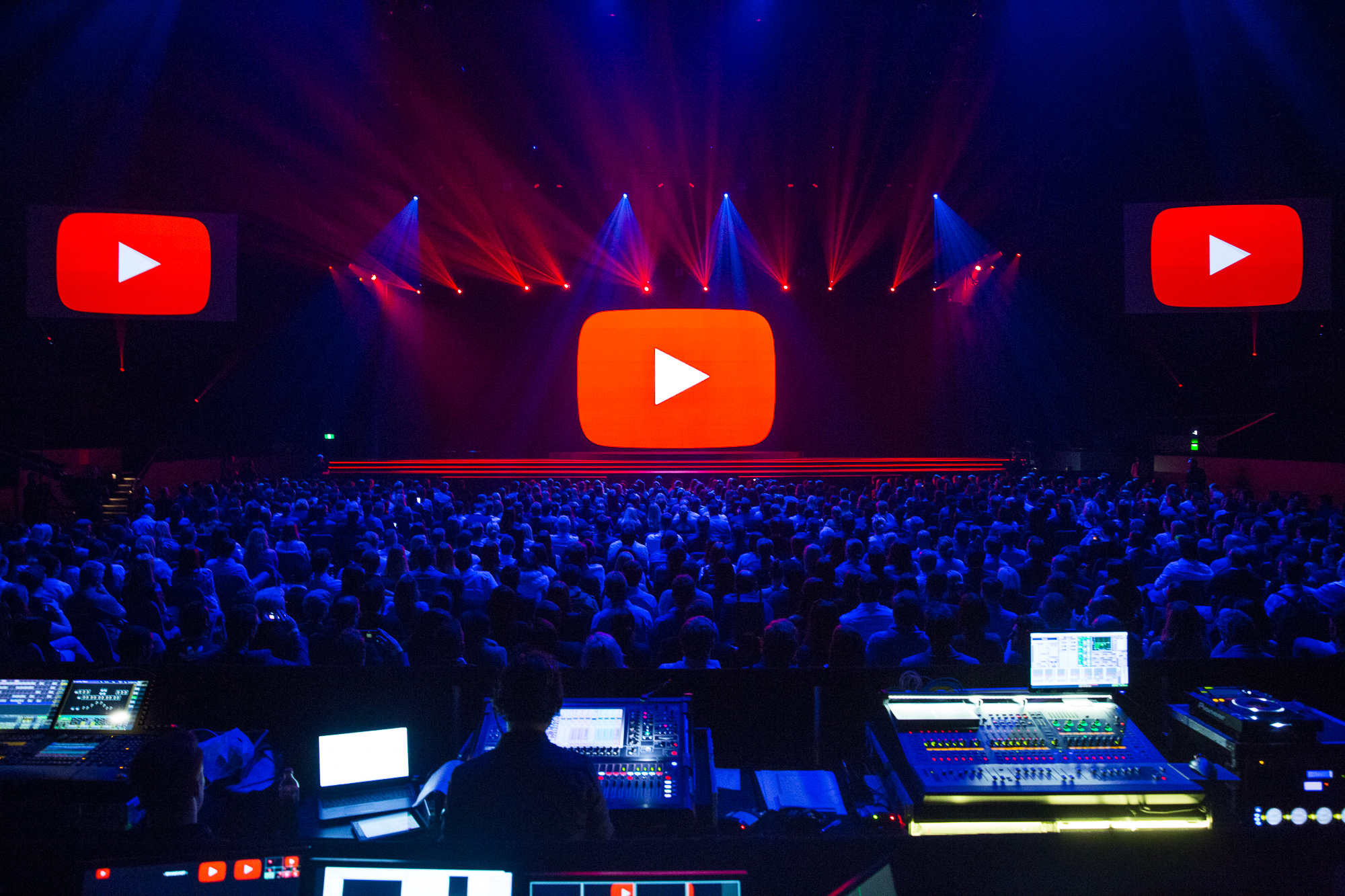
Some event managers think about lighting last. It gets a line on the quote, someone approves it, and the assumption is the AV company will handle it. That's fine for a basic outcome. But if you want your event to feel genuinely different from the last one, lighting is where that happens. Here's what actually moves the needle:
Uplighting transforms a venue
LED uplighting is one of the most cost-effective tools available. A row of fixtures around the perimeter of a room, dialled to your brand colour, changes the entire character of the space. Venues that look generic in house lighting look intentional and polished with a coloured wash.
The detail to get right: the colour on screen rarely matches the colour on a wall. If you're working to a specific brand colour pallet, ask your AV company to programme and adjust on-site before the event. Schedule some time during setup to experiement with different colours.
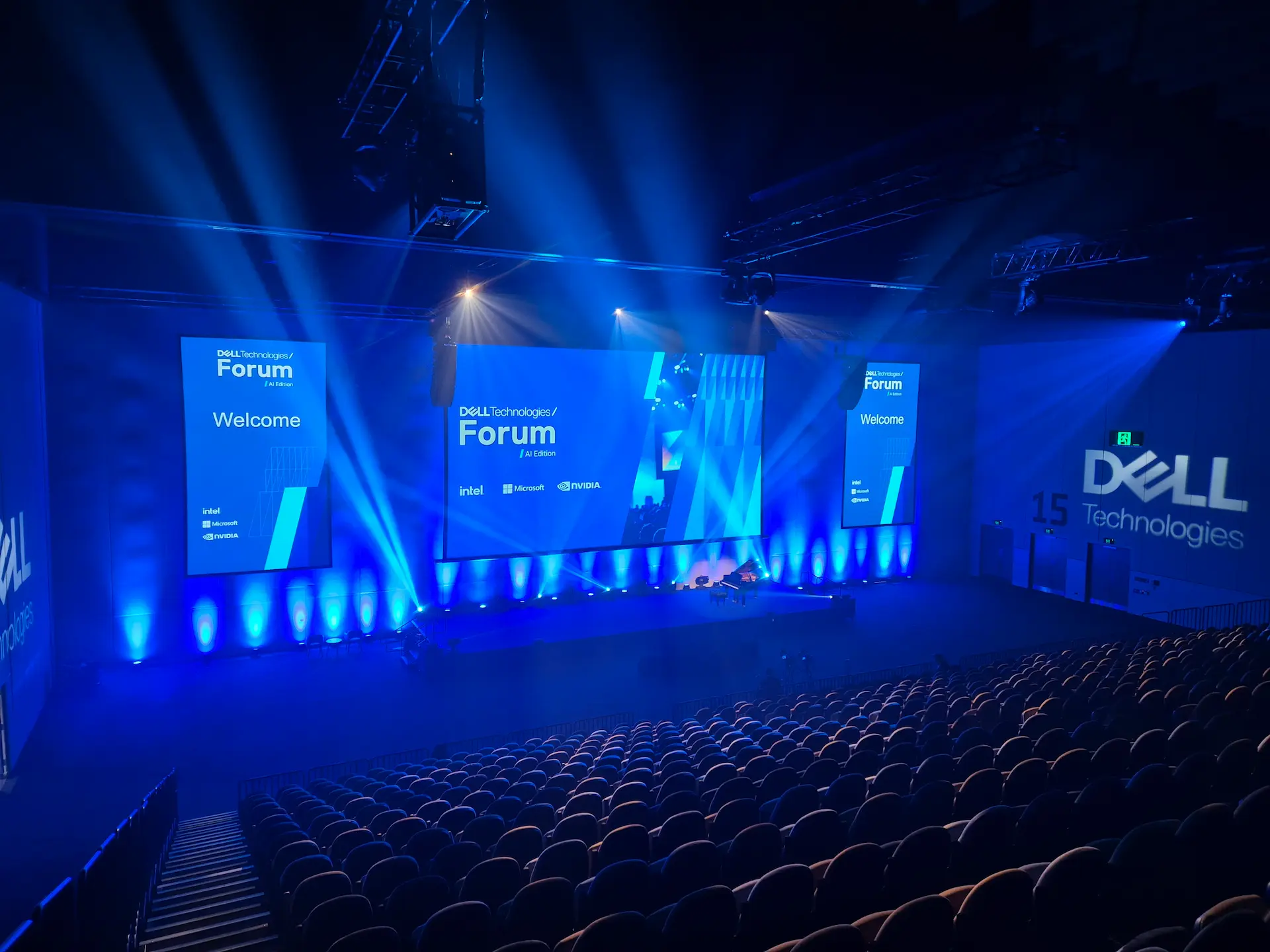
Gobos for branding
A gobo is a stencil fitted into a lighting fixture that projects a pattern or logo onto a surface. For awards nights and product launches, projecting a logo onto a stage floor or backdrop can bemore effective than a vinyl banner and significantly cheaper than a custom LED build.
Custom gobos take a few days to manufacture, so flag this early. Standard pattern gobos (geometric shapes, textures, foliage patterns) are usually in stock with your AV supplier.
Moving heads change the feel of a room
For conferences and forums, static lighting is usually the right call. It's consistent, it photographs well, and it doesn't distract from the content.
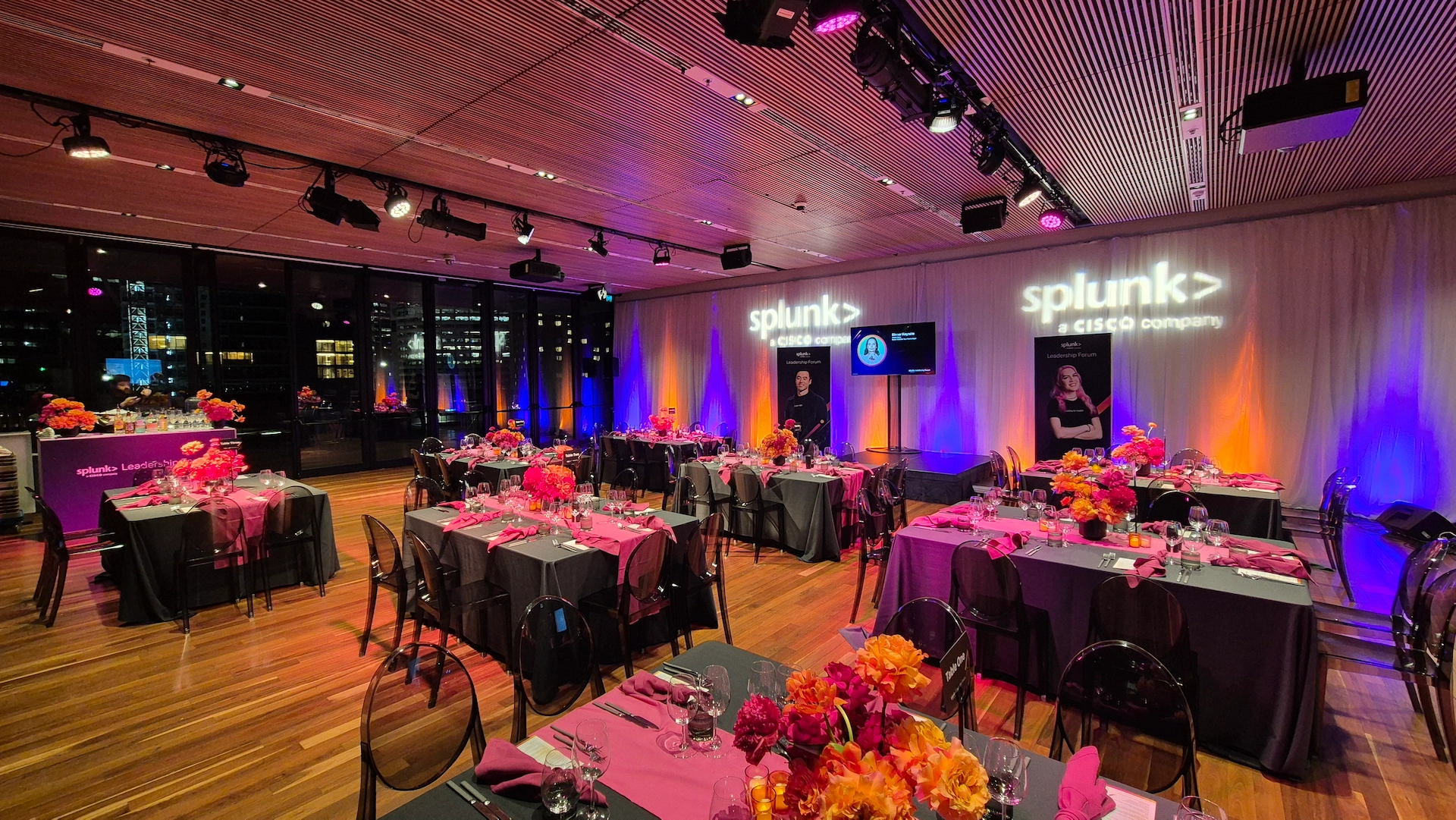
For gala dinners, award presentations, and entertainment segments, moving heads (also called intelligent lighting or automated fixtures) let you shift the entire mood of a room on cue.
The walk-up music hits, the room dims, a single spot follows the award recipient to the stage. That's the difference between an event that feels like a nice dinner and one that feels like an event.
If your run-of-show has clear segments - networking, dinner, ceremony, entertainment - brief your AV company on each one. They'll programme lighting states accordingly so transitions happen cleanly without anyone having to make a call on the night.
Haze
This one is underused at corporate events and overused at concerts, which probably explains the hesitation. A light haze in the room makes beam lighting visible. Without it, the light is just hitting surfaces. With it, you see the beam itself - the shaft of light picking out a speaker, the fan of light above a stage. It's the difference between a room that looks lit and a room that looks dramatic.
For awards nights and product launches, a low-density haze is worth specifying. It photographs exceptionally well and creates depth in video footage. Brief your AV company on the venue's smoke/haze policy first - some have restrictions.
Pin spots for gala dinners
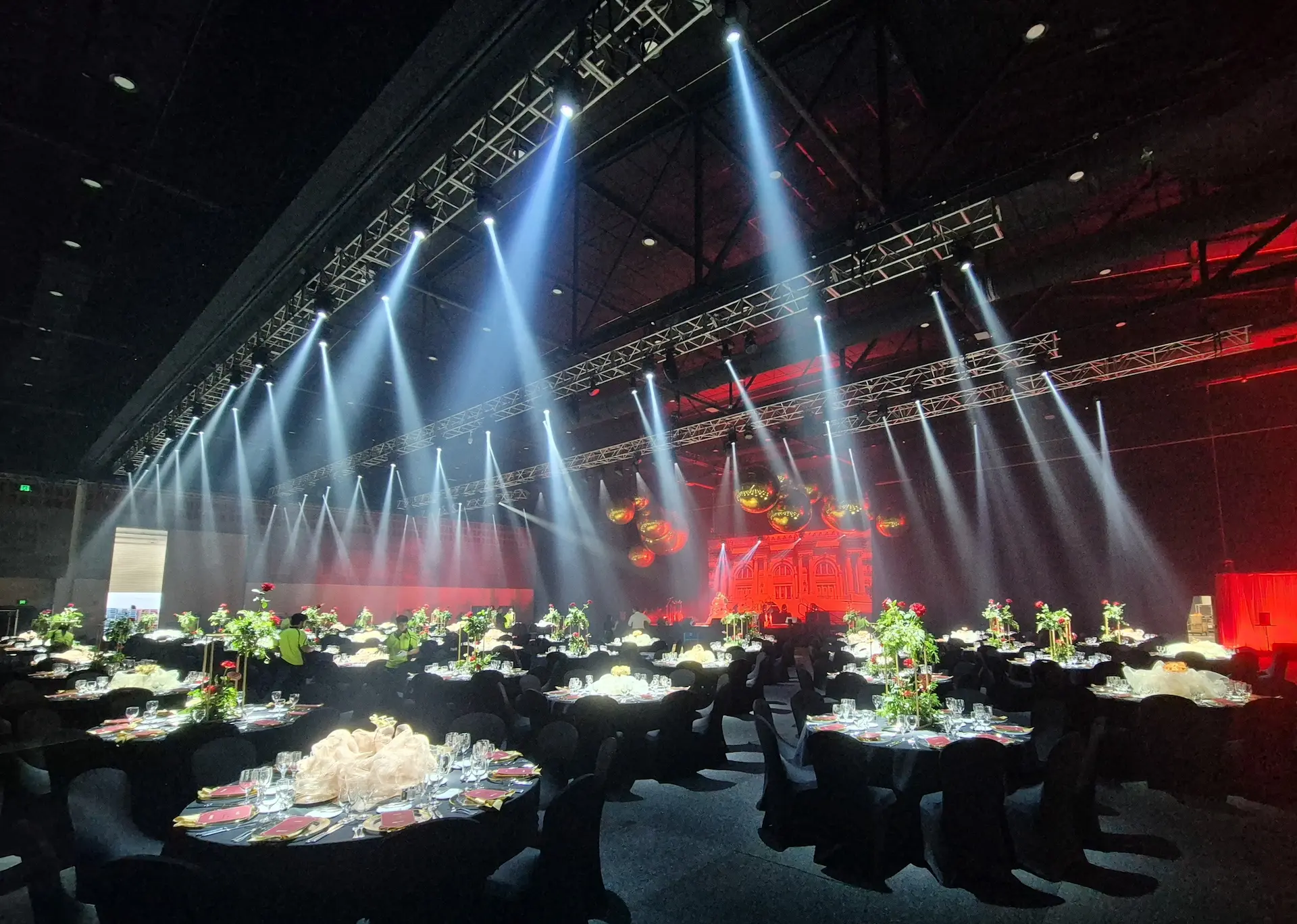
A single small fixture mounted in the truss above each table, aimed directly at the centrepiece, does more for the room aesthetic than almost anything else at the same cost.
The centrepiece catches the light, the table surface glows, and the overall effect is that the room looks expensive and considered. This requires some advance work - your AV company needs the table plan early enough to set positions during bump-in. Worth the coordination.
What to put in your brief
The single biggest difference in lighting outcomes isn't budget - it's a good brief. When you're briefing your AV company on lighting, include:
• Brand colours and any Pantone references
• Whether the event will be photographed or filmed professionally
• The run-of-show with clear segment names and approximate timings
• Whether there are any VIP moments (award presentations, product reveals, executive entries) that should be designed around
• Venue restrictions on rigging points, power draw, or haze
• Any surfaces you want to project onto (walls, floors, ceilings, gauze)
The more specific you are, the more your AV company can design rather than guess. Lighting design that's been thought through looks like it's been thought through.
One final point on budget allocation
If you're working within a fixed AV budget, lighting is usually where you get the best return on extra spend. An extra $3,000 in lighting changes the feel of a room in a way that's immediately visible to every single person in it.
The same spend on a slightly larger PA system is meaningful to about four people. That's not a reason to underspend on audio. It's a reason to make sure lighting gets serious consideration when you're allocating the budget, not just whatever's left.


Giving the world a better AV experience.
Based in Sydney. Delivering events across Australia and internationally since 2005.
Member of the AV Alliance